

About Us
Aspire Quali-Tech - ‘Aspire To Build Quality System ’ Is Providing Services For Complete Environment Monitoring Systems To Various Industries Like Pharmaceutical, Chemical, Healthcare, Environmental Monitoring, Food Industry, Engineering, Research Institutes.
Leading Service Providers for Complete Environment Monitoring Systems To Various Industries
About UsContact Info
- 108, Panchvati Plaza, Plot No. 95-96 Sector-5, Ghansoli Navi Mumbai 400701, India
- +91-9892022757
- aspirequalitech@gmail.com
Complete Thermal Validation Services in Mumbai- India.
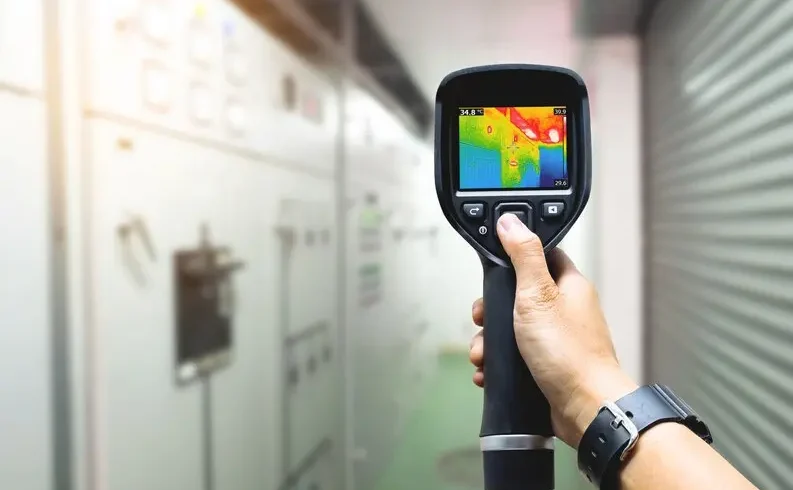
Thermal validation, also known as temperature mapping, is a process used to assess and validate the temperature distribution within controlled environments such as warehouses, cold storage facilities, clean rooms, incubators, ovens, refrigerators, freezers, and other temperature-controlled spaces. The purpose of thermal validation is to ensure that the temperature remains within specified limits throughout the storage or processing area, thus maintaining product quality, integrity, and safety. Here’s an overview of thermal validation or temperature mapping
01
Temperature
Sensors:
Deploy temperature sensors, data loggers, thermocouples, or wireless monitoring systems at strategic locations throughout the controlled environment to capture temperature data and monitor temperature variations over time.
02
Mapping Study:
Conduct a comprehensive temperature mapping study to assess the temperature distribution, gradients, and fluctuations within the storage or processing area under various operating conditions, including worst-case scenarios and seasonal variations.
03
Data Collection and
Analysis:
Collect temperature data at predefined intervals and analyze the data to identify temperature trends, deviations, excursions, and areas of non-compliance with specified temperature ranges and limits.
04
Calibration and
Validation
Calibrate temperature sensors, data loggers, and monitoring devices to ensure accuracy, reliability, and traceability of temperature measurements.
Validate the temperature mapping study by comparing the observed temperature profiles against predefined acceptance criteria, performance standards, and regulatory requirements.
Purpose of Thermal Validation:
Ensure compliance with regulatory requirements, industry standards, and guidelines governing temperature control and monitoring in various industries, including pharmaceuticals, biotechnology, healthcare, food processing, and manufacturing.
Validate and monitor temperature conditions to maintain product quality, stability, and efficacy, particularly for temperature-sensitive products, raw materials, intermediates, and finished goods.
Optimize storage, handling, and processing conditions by identifying temperature variations, hot spots, cold spots, and areas of non-uniformity within the controlled environment.
Identify potential risks, deviations, and vulnerabilities in temperature control systems that could compromise product safety, stability, and regulatory compliance.
Thermal validation or temperature mapping is a critical quality assurance process for ensuring temperature control, uniformity, and compliance with regulatory requirements in controlled environments. By conducting comprehensive validation studies, monitoring temperature conditions, and implementing corrective and preventive measures, organizations can minimize risks, maintain product quality, and ensure patient safety in temperature-sensitive industries.

Aspire Quali-Tech fulfills the needs and expectations of the customers by providing Quality Service in a cost effective way.